Commercial Refrigeration Guide: Walk-In vs. Reach-In Coolers and Why Maintenance Matters
Refrigeration is one of those systems you don’t think about … until it fails. For restaurants, grocery stores, convenience stores, hotels and healthcare facilities, refrigeration isn’t just a convenience; it’s a core operational backbone. Two of the most common systems you’ll encounter are walk-in coolers and reach-in coolers. While both serve the same fundamental purpose, keeping perishable goods at safe temperatures, they differ significantly in design, use case, cost and maintenance needs.
Understanding those differences and committing to proper maintenance can mean the difference between smooth operations and expensive downtime.
What Is a Walk-In Cooler?
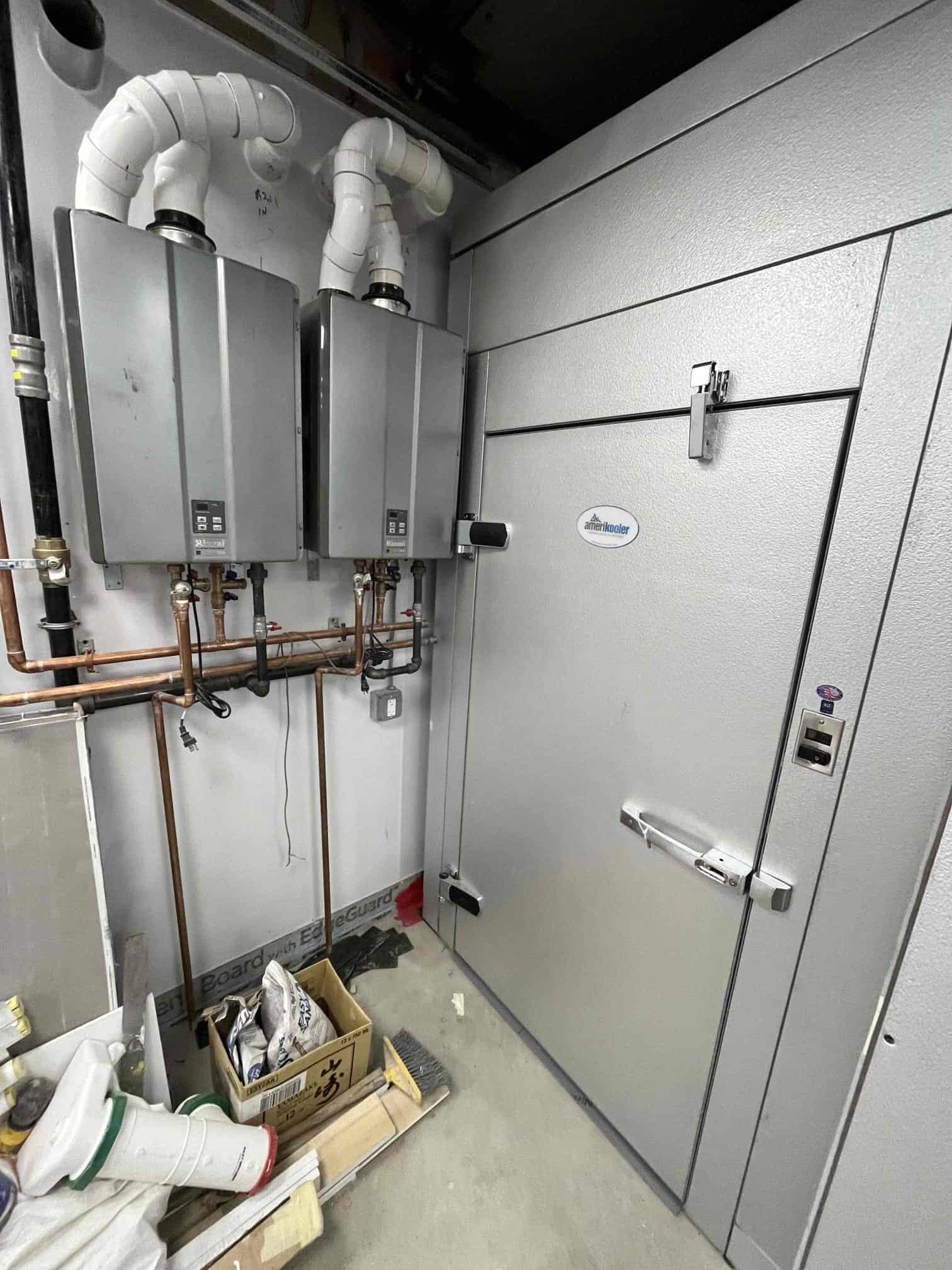
A walk-in cooler is exactly what it sounds like: a large, insulated refrigerated room that you can physically walk into. These systems are typically custom-built or modular units installed in commercial settings where large volumes of perishable goods need to be stored.
Key Characteristics:
- Size & Capacity: Large enough to store bulk inventory
- Temperature Range: Typically 35°F to 41°F
- Installation: Fixed or semi-permanent structure
- Usage: Back-of-house storage for restaurants, warehouses and grocery operations
Walk-in coolers are essential for businesses that rely on bulk purchasing and storage. They allow operators to buy in volume, reduce delivery frequency and maintain organized inventory systems.
What Is a Reach-In Cooler?
A reach-in cooler is a smaller, upright refrigeration unit designed for quick and easy access. These units are often placed in kitchens, behind counters or on the service floor for immediate use.
Key Characteristics:
- Size & Capacity: Compact, limited storage
- Temperature Range: Typically 33°F to 40°F
- Installation: Plug-and-play, movable
- Usage: Frequently accessed items during service
Reach-in coolers are all about speed and convenience. They keep ingredients or products within arm’s reach, making them ideal for fast-paced environments.
Walk-In vs. Reach-In: The Core Differences
While both systems keep food cold, their roles in a commercial setting are very different.
1. Capacity & Storage Strategy
- Walk-In Coolers: Designed for bulk storage and inventory management
- Reach-In Coolers: Designed for day-to-day operational access
Think of walk-ins as your warehouse and reach-ins as your workstation.
2. Accessibility
- Walk-In: Requires entering the unit; less frequent access
- Reach-In: Open-and-close access, often dozens (or hundreds) of times per day
3. Energy Consumption
- Walk-In: More efficient per cubic foot but higher overall energy use due to size
- Reach-In: Lower total energy use but less efficient if overused or poorly maintained
4. Cost
- Walk-In: Higher upfront installation cost; longer lifespan
- Reach-In: Lower upfront cost; easier to replace
5. Customization
- Walk-In: Highly customizable (shelving, layout, size)
- Reach-In: Limited customization, standardized units
Why Most Commercial Operations Need Both
In most commercial environments, it’s not a question of choosing one or the other, you need both working together. A typical workflow looks like this:
- Bulk inventory is delivered and stored in the walk-in cooler
- Staff restocks reach-in units throughout the day
- Reach-ins support service efficiency and speed
This dual-system approach minimizes disruption, maintains organization and ensures food safety.
Why Proper Maintenance Is Non-Negotiable
Refrigeration systems run 24/7. That alone makes maintenance critical but the real stakes are even higher.
1. Food Safety & Compliance
Improper cooling can lead to temperature fluctuations that put food into the “danger zone” (40°F–140°F). This increases the risk of bacterial growth and foodborne illness.
For businesses regulated by health departments, this can result in:
- Failed inspections
- Fines or shutdowns
- Reputational damage
2. Energy Efficiency
A poorly maintained cooler works harder than it should. Dirty coils, worn gaskets or failing compressors force the system to consume more energy to maintain temperature.
The result?
- Higher utility bills
- Increased carbon footprint
- Shortened equipment lifespan
3. Equipment Longevity
Routine maintenance can extend the life of your refrigeration units by years. Neglect, on the other hand, accelerates wear and tear.
Replacing a walk-in cooler is a major capital expense, one that can often be delayed with proper care.
4. Operational Continuity
A refrigeration failure during peak hours is more than inconvenient, it’s disruptive and costly.
- Lost inventory
- Service delays
- Emergency repair costs
Preventive maintenance reduces the risk of unexpected breakdowns.
Key Maintenance Practices for Walk-In Coolers
1. Inspect Door Seals (Gaskets)
Damaged or loose seals allow cold air to escape, forcing the system to overwork.
Tip: Replace gaskets at the first sign of cracking or warping.
2. Clean Condenser Coils
Dust and debris reduce heat transfer efficiency.
Frequency: Every 3–6 months (more often in dusty environments)
3. Monitor Temperature Consistency
Install digital monitoring systems to detect fluctuations early.
4. Check Evaporator Coils
Ice buildup can restrict airflow and reduce cooling efficiency.
5. Inspect Drain Lines
Clogged drains can lead to water buildup and mold issues.
Key Maintenance Practices for Reach-In Coolers
1. Frequent Cleaning
Because reach-ins are accessed constantly, they’re more prone to spills and contamination.
2. Avoid Overloading
Blocking airflow reduces cooling efficiency and can create warm spots.
3. Check Door Closures
Reach-in doors are opened frequently, increasing wear on hinges and seals.
4. Calibrate Thermostats
Ensure the unit is maintaining accurate temperatures.
Signs Your Refrigeration System Needs Attention
Whether it’s a walk-in or reach-in unit, watch for these red flags:
- Temperature inconsistencies
- Excessive frost or ice buildup
- Unusual noises from the compressor
- Increased energy bills
- Water pooling inside or around the unit
Ignoring these warning signs can turn a minor issue into a major repair.
The Business Case for Maintenance
For commercial building owners and operators, refrigeration maintenance isn’t just a technical issue, it’s a financial and operational priority.
ROI of Proper Maintenance:
- Lower energy costs
- Reduced repair expenses
- Longer equipment lifespan
- Improved compliance
- Better operational efficiency
In other words, maintenance pays for itself.
Final Thoughts
Walk-in coolers and reach-in coolers play distinct but complementary roles in commercial refrigeration. Walk-ins handle bulk storage and inventory control, while reach-ins support speed and accessibility during daily operations. But regardless of size or function, both systems share one critical requirement: consistent, proactive maintenance.
Neglecting refrigeration systems doesn’t just risk equipment failure, it puts your entire operation at risk. From food safety to energy costs to customer satisfaction, the ripple effects are significant. For commercial building owners and operators, the takeaway is simple:
Treat your refrigeration systems as mission-critical assets, not background equipment. Because when they fail, everything else feels it.
Ready to take your coolers to the next level? Contact NRI today!
About Nationwide Refrigeration, Inc.
Nationwide Refrigeration, Inc. (NRI) is an employee-owned company providing expert commercial refrigeration, HVAC and ice machine services across Washington, D.C., Maryland and Virginia since 1974. Known for its commitment to doing the job right the first time and the right thing every time, NRI offers emergency service from EPA-certified technicians and supports over 160 equipment brands. In 2020, NRI became fully employee-owned, reinforcing its dedication to quality, integrity and long-term customer relationships. The company’s strong, people-first culture continues to drive its reputation for reliability and resilience. For more information, please visit nriusa.com.