12 Surprising Things HVAC Techs Repair and Install (Beyond Air Conditioners)
When most people hear the term “HVAC technician,” they imagine someone fixing a broken air conditioner during a heatwave or replacing a furnace in the winter. While those are certainly part of the job, the reality is far more expansive. HVAC actually stands for heating, ventilation, and air conditioning, and in many cases, technicians work in the broader field of HVACR: heating, ventilation, air conditioning and refrigeration.
That extra “R” dramatically expands the scope of the job. In addition to residential heating and cooling systems, HVAC technicians often repair and install an incredible range of equipment that most people never associate with the trade. From restaurant ice machines to industrial chillers and hospital humidity systems, HVAC professionals keep countless behind-the-scenes systems running in homes, businesses and specialized facilities.
Below is a look at some of the lesser-known things HVAC technicians work on every day.
1. Commercial Ice Machines
One of the most surprising pieces of equipment HVAC technicians frequently service is the commercial ice machine. Restaurants, hotels, hospitals and convenience stores depend on these machines to produce large volumes of ice throughout the day.
Ice machines are essentially refrigeration systems. They rely on compressors, evaporators, refrigerant lines and water supply systems; the same core technology used in air conditioners and refrigerators. Because of this, HVAC technicians are often the professionals called to install and repair them.
When servicing ice machines, technicians may:
- Diagnose refrigerant leaks
- Replace compressors or fans
- Clean scale buildup inside evaporator plates
- Fix water supply valves or pumps
- Repair electronic control boards
In commercial environments, ice machines run constantly. When they fail, businesses can lose service capacity or even risk food safety issues. HVAC technicians are often the first call when these systems stop producing ice.
2. Walk-In Coolers and Freezers
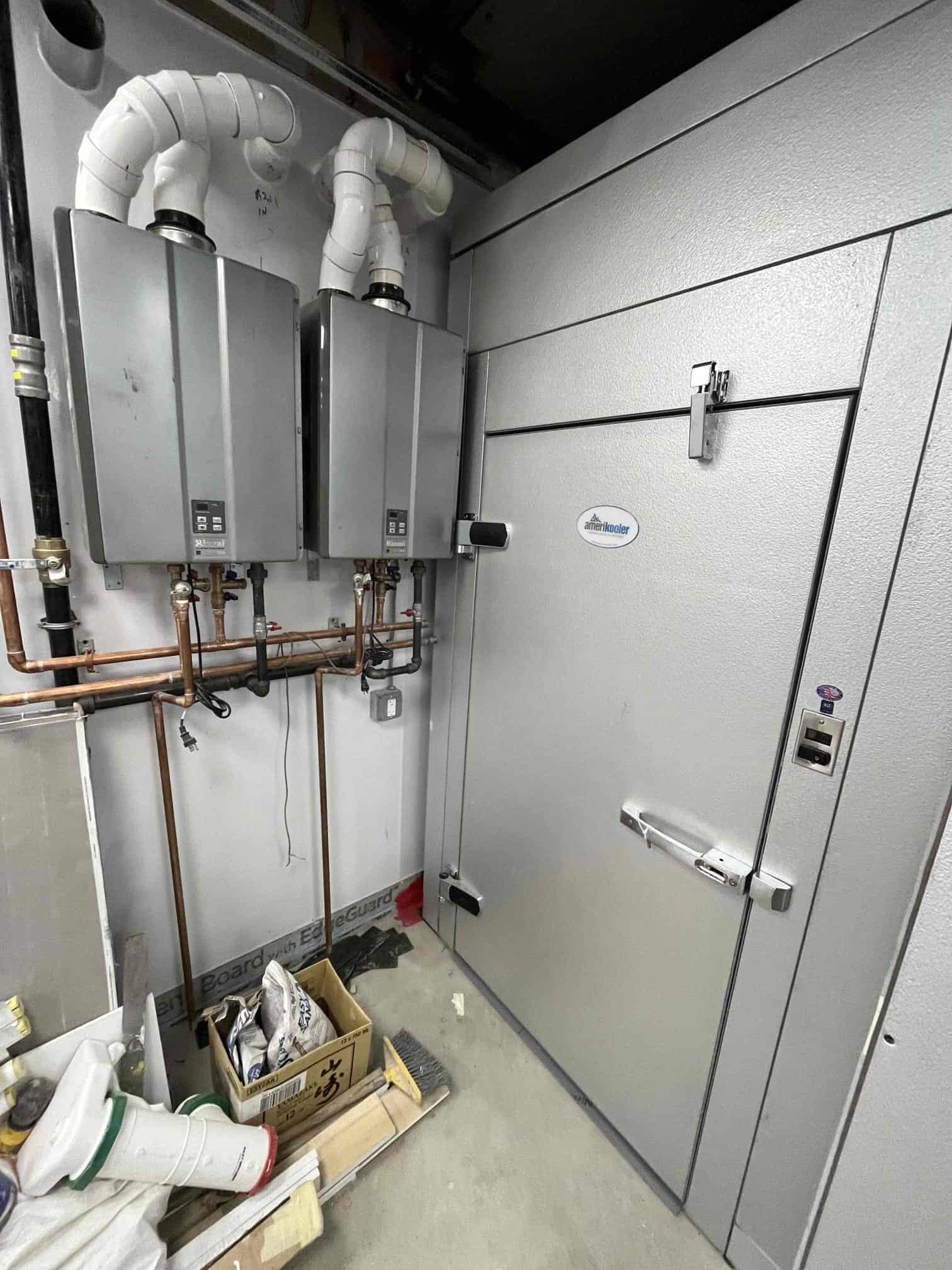
If you’ve ever worked in a restaurant or grocery store, you’ve likely stepped inside a walk-in cooler or freezer. These large refrigerated rooms keep perishable goods safe at precise temperatures and HVAC technicians are responsible for installing and maintaining them. These systems consist of:
- Refrigeration compressors
- Condensing units
- Evaporator coils
- Temperature sensors
- Insulated panels and doors
Because they operate around the clock, walk-in units are vulnerable to issues like refrigerant leaks, fan failures and thermostat malfunctions. HVAC technicians must troubleshoot these systems quickly to prevent food spoilage and business losses.
Commercial refrigeration, including walk-in coolers, freezers and display refrigerators, is a major specialization within HVAC work.
3. Beverage and Draft Cooling Systems
The cold soda in a fountain drink machine or the perfectly chilled beer on tap is also thanks to HVAC technology. Beverage cooling systems use refrigeration components to keep liquids at precise temperatures while they’re stored or dispensed.
HVAC technicians may install or repair systems such as:
- Soda fountain chillers
- Glycol cooling systems for beer taps
- Beverage refrigeration cabinets
- Cold plate systems in bars and restaurants
These systems require careful calibration to maintain flavor quality and prevent freezing. A small temperature imbalance can ruin a beverage line, so technicians must ensure the cooling equipment runs exactly as designed.
4. Data Center Cooling Systems
Modern life depends on data centers; large facilities filled with servers that power websites, cloud storage, and digital services. These servers produce enormous amounts of heat, and without proper cooling they would quickly fail.
HVAC technicians are responsible for installing and maintaining specialized cooling systems used in these environments. These may include:
- Precision air conditioning systems
- Computer room air handlers (CRAH units)
- Chilled water cooling loops
- Liquid cooling systems
- Raised-floor airflow systems
These systems must maintain stable temperatures and humidity levels to protect sensitive electronics. Even a brief cooling failure can cause costly outages, making HVAC technicians critical to the operation of modern digital infrastructure.
5. Humidifiers and Dehumidifiers
Temperature isn’t the only environmental factor HVAC professionals manage. Humidity control is just as important in many settings. Large humidifiers and dehumidifiers are commonly installed in places like:
- Hospitals
- Museums and archives
- Data centers
- Indoor agriculture facilities
- Manufacturing plants
These systems regulate moisture in the air to protect equipment, prevent mold, preserve artifacts or improve indoor air quality.
For example, museums often rely on humidity control systems to protect delicate paintings and historical artifacts from deterioration. Similarly, hospitals use humidity management to maintain sterile environments and improve patient comfort.
HVAC technicians install and maintain the equipment that keeps these environments stable.
6. Cooling Towers
Cooling towers are massive heat-removal systems commonly used in large commercial buildings and industrial facilities. You’ve probably seen them on rooftops or near factories, large structures releasing plumes of water vapor. These towers remove heat from water used in air conditioning or industrial processes. HVAC technicians maintain them by:
- Cleaning scale buildup
- Replacing pumps and fans
- Repairing valves and water distribution systems
- Ensuring proper water chemistry
Cooling towers are especially common in large office buildings, hospitals, universities and manufacturing plants. Their maintenance requires both mechanical knowledge and an understanding of water treatment systems.
7. Boilers and Radiant Heating Systems
Although many homes rely on forced-air heating, others use boilers and radiant heating systems. Boilers heat water or steam and distribute it through pipes to warm buildings.
HVAC technicians who specialize in heating systems may:
- Install residential or commercial boilers
- Replace circulation pumps
- Repair pressure valves and burners
- Maintain hydronic heating systems
Boilers are common in older homes, apartment buildings, schools and industrial facilities. They require careful inspection and maintenance to operate safely and efficiently.
8. Air Handling Units
Large buildings such as office towers, hospitals and universities rely on air handling units (AHUs) to circulate and filter air throughout the structure. These systems include components such as:
- Fans and blowers
- Air filters
- Heating and cooling coils
- Dampers
- Humidity control equipment
HVAC technicians install, maintain and repair these systems to ensure proper ventilation and air quality. Without them, indoor environments would quickly become uncomfortable or even unsafe.
9. Environmental Chambers and Incubators
Some HVAC professionals work with highly specialized systems used in research laboratories and manufacturing environments. Environmental chambers and incubators create controlled conditions for scientific experiments or product testing. These systems can regulate:
- Temperature
- Humidity
- Air pressure
- Airflow
For example, pharmaceutical companies may use environmental chambers to test how medications respond to different climates. HVAC technicians maintain the cooling and heating systems that make these controlled environments possible.
10. Commercial Kitchen Exhaust and Ventilation
Restaurants generate enormous amounts of heat, grease and smoke. Proper ventilation is critical for safety and sanitation, which is why commercial kitchens rely on complex exhaust systems.
HVAC technicians install and maintain equipment such as:
- Range hoods
- Exhaust fans
- Make-up air systems
- Grease duct ventilation
These systems remove smoke, heat, and grease particles from kitchens while replacing them with fresh air. Without them, restaurants would quickly become unsafe and violate health codes.
11. Supermarket Refrigeration Systems
Grocery stores rely on extensive refrigeration networks to keep food safe. These systems include long rows of display cases, freezer aisles, and back-room storage units. HVAC technicians maintain these systems by:
- Servicing compressors and condensers
- Repairing refrigerant leaks
- Calibrating temperature sensors
- Ensuring efficient energy usage
Because these systems are so large and interconnected, repairs often require specialized training in commercial refrigeration.
12. Pool Dehumidification Systems
Indoor swimming pools create enormous amounts of humidity. Without proper ventilation and dehumidification, buildings can develop mold, corrosion and structural damage.
HVAC technicians install and service specialized systems that:
- Remove moisture from the air
- Control condensation on walls and ceilings
- Maintain comfortable air temperatures
These systems are common in hotels, fitness centers, schools and community recreation centers.
Why HVAC Technicians Work on So Many Different Systems
The reason HVAC technicians handle such a wide range of equipment comes down to the core principles of the trade. Most systems they work on share the same fundamental technologies:
- Refrigeration cycles
- Airflow management
- Heat transfer
- Electrical controls
- Mechanical components
Whether it’s an ice machine, a data center cooler, or a supermarket freezer, the underlying science is similar. HVAC training prepares technicians to diagnose and repair any system that moves heat or controls air quality.
As buildings become more complex, HVAC technicians are increasingly responsible for maintaining sophisticated environmental systems that go far beyond traditional heating and cooling.
The Hidden Backbone of Modern Infrastructure
HVAC technicians often work behind the scenes, fixing systems most people never think about. Yet their work keeps many essential services functioning. They ensure that:
- Hospitals maintain sterile environments
- Restaurants keep food safe
- Data centers avoid overheating
- Museums preserve priceless artifacts
- Supermarkets keep groceries fresh
In other words, HVAC professionals are quietly responsible for maintaining the environmental systems that support modern life.
Final Thoughts
While homeowners may only see HVAC technicians when their furnace or air conditioner breaks, the trade encompasses far more than residential climate control. From ice machines and walk-in freezers to laboratory chambers and massive cooling towers, HVAC technicians maintain the systems that regulate temperature, humidity, and air quality across countless industries.
The next time you grab a cold drink, step into a perfectly cooled building, or walk through the refrigerated aisles of a grocery store, there’s a good chance an HVAC technician helped make that experience possible, even if you never realized it.
Ready to have your ice machines, data centers and hot-side service done right? CONTACT US!
About Nationwide Refrigeration, Inc.
Nationwide Refrigeration, Inc. (NRI) is an employee-owned company providing expert commercial refrigeration, HVAC and ice machine services across Washington, D.C., Maryland and Virginia since 1974. Known for its commitment to doing the job right the first time and the right thing every time, NRI offers emergency service from EPA-certified technicians and supports over 160 equipment brands. In 2020, NRI became fully employee-owned, reinforcing its dedication to quality, integrity and long-term customer relationships. The company’s strong, people-first culture continues to drive its reputation for reliability and resilience. For more information, please visit nriusa.com.