Best Practices for Working with A2L Refrigerants (and Important Information for Non-Experts)
The refrigeration and HVAC industry is undergoing a significant transition as environmental regulations push manufacturers toward refrigerants with lower climate impact. One of the most important developments in this shift is the growing adoption of A2L refrigerants, a class of chemicals designed to reduce greenhouse gas emissions while maintaining performance in cooling systems.
Although A2L refrigerants are becoming increasingly common in residential air conditioning, commercial refrigeration, and automotive systems, many technicians, building managers and everyday consumers still have questions about how they work and how they should be handled safely.
This guide explains what A2L refrigerants are, why they are being adopted, the risks and benefits involved, and best practices for working with them, especially for those who are not experts in refrigeration technology.
What Are A2L Refrigerants?
A2L refrigerants are a category of cooling chemicals defined by the ASHRAE refrigerant safety classification system, which categorizes refrigerants based on toxicity and flammability. The designations:
- The ‘A’ indicates low toxicity
- The ‘2’ indicates lower flammability
- The ‘L’ indicates low burning velocity
A2L refrigerants are mildly flammable but relatively safe compared with other refrigerants, especially those in the highly flammable A3 category such as propane-based refrigerants.
Examples of commonly used A2L refrigerants include:
- R-32
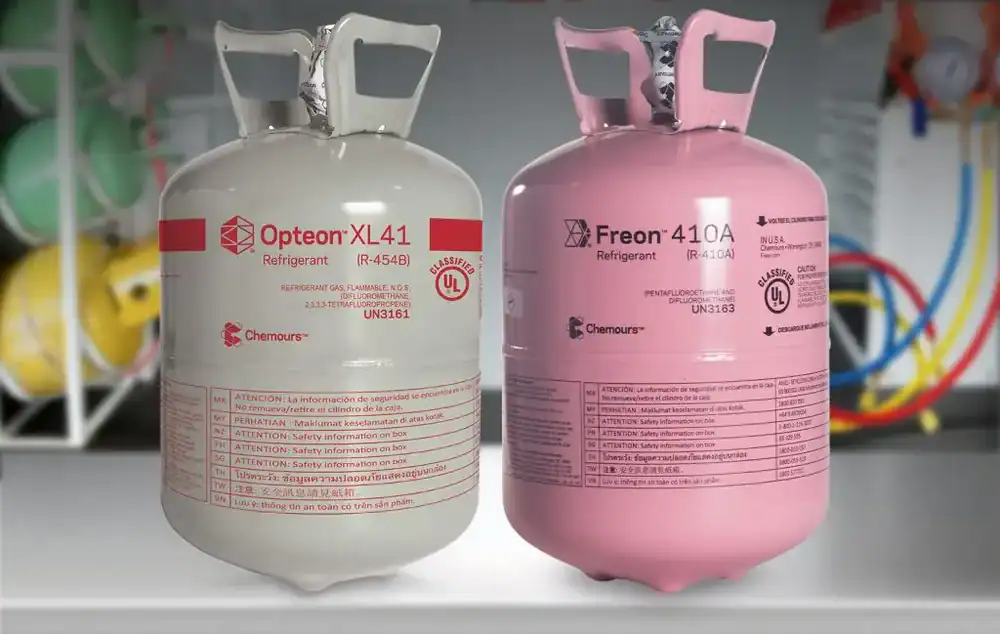
- R-454B
- R-1234yf
- R-454A and R-454C
Most A2L refrigerants are hydrofluoroolefins (HFOs) or blends containing them. These chemicals are specifically designed to deliver similar performance to older refrigerants but with significantly lower global warming potential (GWP).
Why the HVAC Industry Is Switching to A2L Refrigerants
For decades, refrigerants such as R-22 and R-410A dominated the cooling industry. These chemicals contribute significantly to greenhouse gas emissions. New environmental regulations and climate agreements have driven the search for alternatives with lower environmental impact.
A2L refrigerants provide several advantages:
Lower Global Warming Potential
One of the biggest benefits of A2L refrigerants is their reduced global warming potential compared to traditional refrigerants. Many A2L options fall well below regulatory thresholds for greenhouse gas emissions.
Improved Energy Efficiency
Many A2L refrigerants operate more efficiently than older systems, helping reduce energy consumption in HVAC equipment.
Regulatory Compliance
Governments and environmental agencies are increasingly mandating refrigerants with lower environmental impact. As a result, A2L refrigerants are expected to become the standard in many new systems.
Similar System Performance
Despite environmental improvements, A2L refrigerants can perform similarly to existing refrigerants in cooling and heat-pump systems, which makes transitioning easier for manufacturers.
Understanding the Safety Profile of A2L Refrigerants
While A2L refrigerants are considered relatively safe, they do introduce new safety considerations that technicians and building managers must understand.
Mild Flammability
The most widely discussed aspect of A2L refrigerants is their mild flammability. Unlike traditional A1 refrigerants (such as R-410A), A2L refrigerants can burn under certain conditions. Though, they are difficult to ignite and burn slowly if ignition occurs. In fact, their flame propagation speed is very low, meaning that even if ignition occurs, the flame spreads slowly and may self-extinguish.
High Ignition Threshold
For ignition to occur, A2L refrigerant concentrations must reach a specific range between the lower flammability limit (LFL) and upper flammability limit (UFL). Systems are designed to prevent concentrations from reaching those levels. In practice, this means the risk of ignition is low when systems are properly installed and ventilated.
Leak Risks
Like any refrigerant, leaks can pose risks. In confined spaces, leaked refrigerant could accumulate to concentrations where flammability becomes possible. For this reason, new safety standards emphasize leak detection and ventilation.
Best Practices for Working with A2L Refrigerants
Although A2L refrigerants are designed to be safe, proper handling and system design are essential. The following best practices are widely recommended across the HVAC industry.
1. Use Equipment Specifically Designed for A2L Refrigerants
One of the most important rules is that A2L refrigerants must only be used in systems designed for them.
Older HVAC systems cannot simply be retrofitted with A2L refrigerants because pressure characteristics, materials and safety requirements differ. New A2L-compatible equipment typically includes:
- Updated compressors
- Improved system controls
- Enhanced safety features
- Leak detection capabilities
2. Ensure Proper Ventilation
Ventilation is one of the most effective ways to reduce risk when working with mildly flammable refrigerants.Proper airflow prevents refrigerants from accumulating to flammable concentrations if a leak occurs. Best practices include:
- Adequate mechanical ventilation in machinery rooms
- Proper ventilation in pipe shafts
- Installation of ventilation systems triggered by refrigerant detectors
Building codes increasingly require these features for A2L installations.
3. Install Leak Detection Systems
Leak detection is becoming a standard requirement for A2L systems. Many HVAC systems using larger charges of A2L refrigerants must include A2L-compatible leak detectors that can trigger alarms or ventilation systems if refrigerant is detected. Effective leak detection systems can:
- Alert technicians to refrigerant leaks
- Automatically activate ventilation
- Shut down systems if necessary
These safety systems significantly reduce the risk associated with refrigerant leaks.
4. Use Certified Tools and Components
Technicians working with A2L refrigerants should use tools designed or approved for mildly flammable refrigerants, including:
- Refrigerant recovery machines
- Leak detectors
- Charging equipment
- Vacuum pumps
Using certified tools ensures that equipment does not create sparks or other ignition sources during servicing. Proper cylinder storage is also important. A2L refrigerant cylinders are typically marked with a distinct red band and include pressure-relief valves and specialized connections.
5. Follow Updated Codes and Standards
As A2L refrigerants become more common, building codes and safety standards continue to evolve.
Key industry standards include:
- ASHRAE Standard 34 (refrigerant classification)
- ASHRAE Standard 15 (refrigeration safety)
- UL 60335-2-40 (equipment safety)
These standards establish guidelines for:
- Maximum refrigerant charge limits
- Equipment design
- Installation practices
- Detection systems
- Ventilation requirements
Compliance with these standards ensures systems are safe for building occupants and technicians.
6. Train Technicians Properly
Working with A2L refrigerants requires updated training. Technicians should understand:
- Flammability characteristics
- Proper charging and recovery procedures
- Leak detection methods
- Emergency response protocols
Training helps reduce human error and ensures safe handling during installation and maintenance.
What Non-Experts Should Know About A2L Refrigerants
Although technicians and engineers need detailed knowledge, everyday building owners and homeowners only need to understand a few key points.
1. A2L Refrigerants Are Designed to Be Safe
Despite the “flammable” label, A2L refrigerants are much less flammable than many common fuels and are difficult to ignite under normal conditions. Modern systems are designed with multiple safety features to prevent accidents.
2. They Are Better for the Environment
A2L refrigerants significantly reduce greenhouse gas emissions compared with older refrigerants, helping meet global climate goals. This environmental benefit is the main reason governments and manufacturers are transitioning to these refrigerants.
3. New Systems May Use Different Refrigerants
If you install a new air conditioning or heat-pump system in the coming years, it may use an A2L refrigerant instead of older chemicals like R-410A. This change is normal and part of an industry-wide transition.
4. You Should Not Modify Refrigerant Systems Yourself
Refrigeration systems are complex and regulated. Only trained HVAC professionals should service or recharge systems that use A2L refrigerants. Improper handling could damage equipment or create safety hazards.
The Future of A2L Refrigerants
The adoption of A2L refrigerants represents one of the biggest transitions in the HVAC industry in decades. As regulations tighten and manufacturers continue improving system design, A2L refrigerants are expected to become the new standard for many air-conditioning, refrigeration and heat-pump systems worldwide.
Ongoing innovations may further improve safety and efficiency, including:
- Smarter leak detection systems
- Advanced refrigerant monitoring
- Improved building ventilation standards
- New low-GWP refrigerant blends
These advances will continue making A2L systems safer and more environmentally sustainable.
A2L refrigerants are reshaping the HVAC industry by providing a more environmentally friendly alternative to older refrigerants. While their mild flammability introduces new safety considerations, modern equipment, updated building codes and improved training ensure that these refrigerants can be used safely in homes and businesses.
For professionals working with HVAC systems, understanding best practices, such as proper ventilation, leak detection, and equipment compatibility, is essential. For non-experts, the key takeaway is simple: A2L refrigerants are part of a safer, greener future for cooling technology and, when installed and maintained correctly, they pose minimal risks.
As the industry continues to evolve, staying informed about refrigerant technologies and safety standards will be essential for technicians, facility managers and anyone responsible for maintaining cooling systems.
Ready for your new A2L refrigerant systems to be installed or maintenanced? CONTACT US.
About Nationwide Refrigeration, Inc.
Nationwide Refrigeration, Inc. (NRI) is an employee-owned company providing expert commercial refrigeration, HVAC and ice machine services across Washington, D.C., Maryland and Virginia since 1974. Known for its commitment to doing the job right the first time and the right thing every time, NRI offers emergency service from EPA-certified technicians and supports over 160 equipment brands. In 2020, NRI became fully employee-owned, reinforcing its dedication to quality, integrity and long-term customer relationships. The company’s strong, people-first culture continues to drive its reputation for reliability and resilience. For more information, please visit nriusa.com.